
AI Learning Space
When content and school conditions were still incomplete, turn agents, learning terminals, and school operations into a self-directed learning loop that can be used every day
What this product does
The AI Learning Space is not a generic chatbot dropped into a study hall. It reorganizes the full flow of self-directed learning at school.
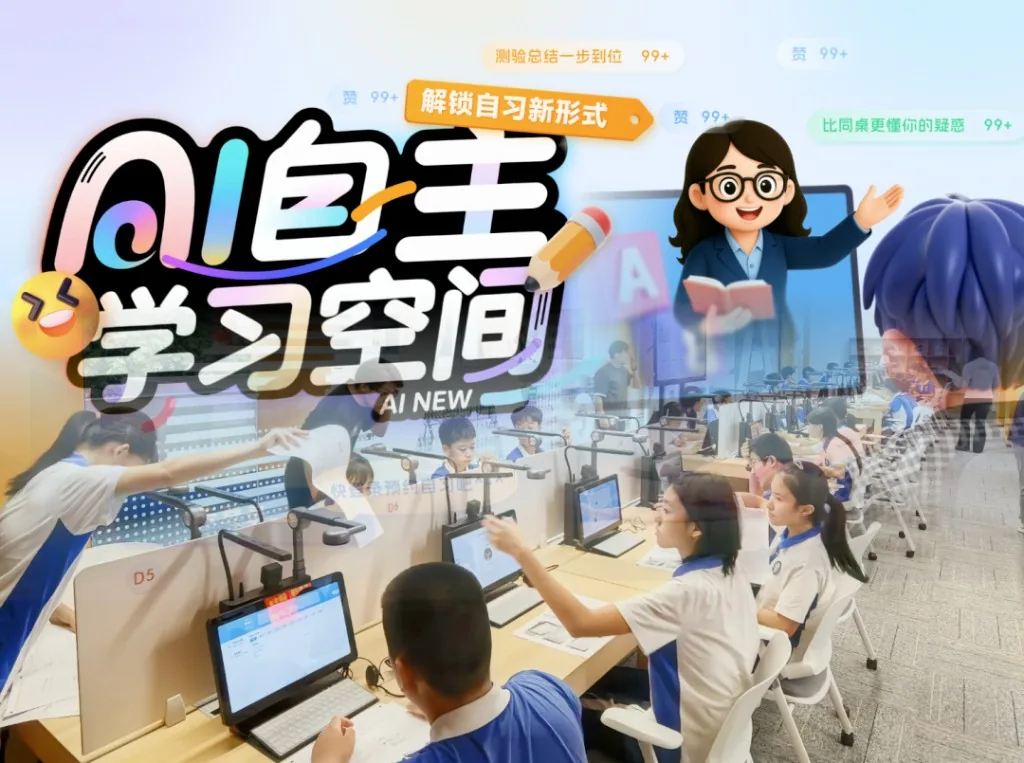
Students enter through booking and identity checks, then use a learning terminal for chapter study, textbook accompaniment, personalized quizzes, video review, or open discussion. AI provides guidance, practice, and feedback along the way; learning behavior is then stored as process records and learning insight that teachers can review.
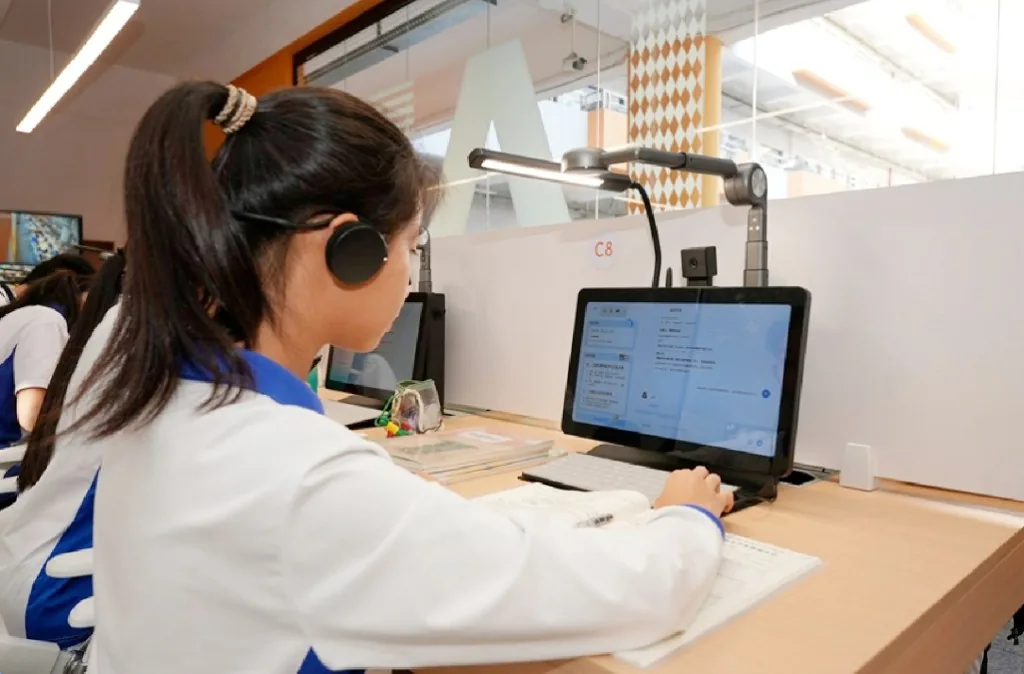
I owned the first AI Learning Space from on-site trial to routine operations, watched how students, teachers, and school administrators actually used it, and fed field problems back into product, algorithm, and engineering. That process became a main source of product mechanisms and delivery standards when we later copied the setup across schools.
So the project had to handle AI capability, learning flow, multi-surface systems, content supply, and school operations at once — not just a conversation UI. More important: early on, the item bank, course content, and customer scenarios were all incomplete. Product work was not waiting for conditions to be ready. It was deciding which gaps had to be filled first, and which could be built while we shipped.
Three product judgments
-
Different learning tasks need different agent workflows, not one all-purpose chat box. Open discussion is for exploration; chapter study has to stay on the textbook context; personalized quizzes should adapt to how the student is doing; photo-based explanation must avoid leaking the answer too early, and keep checking whether the student actually understands.
-
In education, AI cannot be judged only by “is the answer correct.” I cared about four things: whether the result is reliable; whether the process is actually guiding thinking; whether behavior has limits when the student keeps asking, gets stuck, or pushes back; and whether teachers can understand, inspect, and correct the AI’s judgment.
-
A self-directed learning product should not become a homework-search tool. If students can always get the answer faster, independent thinking is replaced, and teachers only see outcomes, not process. The product should organize practice and feedback around learning state, so AI accompanies thinking instead of finishing the task for the student.
These judgments shaped agent workflows, memory, tool use, evaluation, and later how we supplied content and validated on site.
How we broke through
01|Content was incomplete, so supply became a product capability
Early on, the company lacked the item bank and course content that self-directed learning needs. I did not treat “wait until procurement is done” as a start condition. In parallel I briefed suppliers such as Xuekewang, 21st Century Education, and Jingyou, then handed follow-up to procurement; and for videos and slides schools already had, we built an internal processing pipeline — after a video is published, students can ask the AI teacher about it at any time; from textbooks and teacher guides we generated high-quality, well-designed slides as a “Course Voice” module, so students could self-study after class with the AI teacher still present.
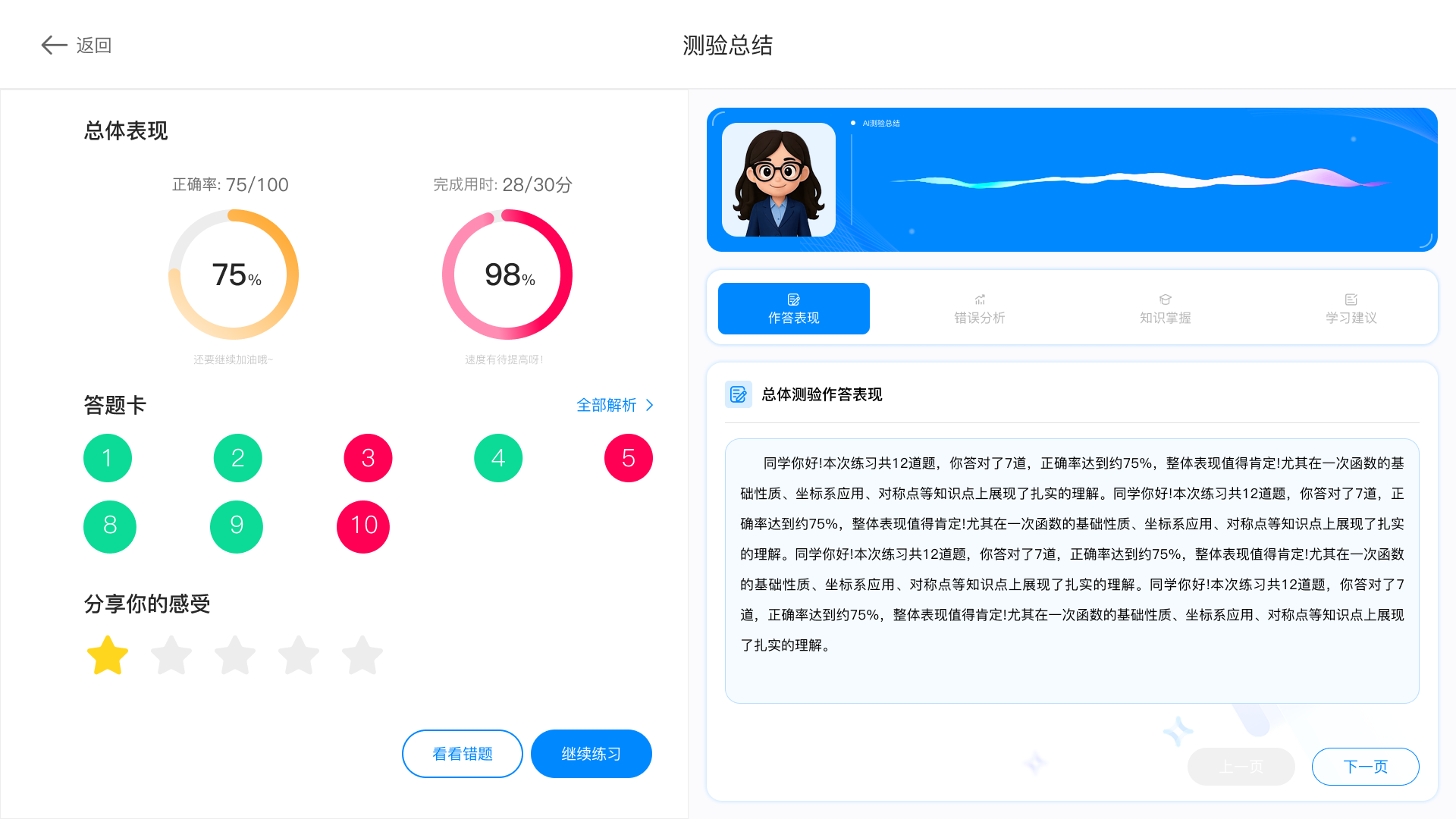
Once the item bank was in, we built personalized quizzes: if a student gets stuck, they can take heuristic explanation from the companion, then receive a personal summary, error analysis, and targeted explanation. The intent is to help students find and close gaps through their mistakes, not to offer another search box.
02|Use AI workflows for content volume people cannot cover
Schools had large amounts of unstructured video and English word lists, and the company had no extra editorial team to proof them one by one. The real question was not “is there a model that can process video,” but where the acceptable automation boundary sits between cost and quality.
I designed content processing as a multi-stage workflow: ASR / OCR, text correction, subject formulas and chemical notation, generation, and automatic checks, with humans only at high-risk nodes. Video subtitles get special correction for math formulas, physics symbols, and chemical notation, and the app keeps a subtitle-error feedback entry; English words start from textbook segmentation and OCR, then generate example sentences, diagrams, and read-aloud audio, with multi-stage checks for quality.
The goal is not 100% automation. It is to make a large volume of content publishable, and to concentrate people where AI is least sure and risk is highest.
03|Turn a field request into a 3-day product experiment
In the partnership with Shenzhen Foreign Language School’s junior high, the English department head asked for essay and daily writing review. I did not put it in the regular backlog to wait for engineering capacity. I used vibe coding for on-site validation: in 3 days we had a working English review workflow, and compared it directly with real teacher marks.
Across a few classes and a hundred-plus essays, the average AI–teacher score gap was about 0.3 points; aside from a few outliers, per-essay deviation mostly stayed inside the 1–2 point tolerance teachers had named. That validation then became the basis for product direction and later investment.
How the product is organized
For students, teachers, school administrators, and space operations, the product splits into a student terminal, teacher console, school platform, booking kiosk, and display wall. The student side carries learning tasks, learning resources, the AI teacher, and the companion agent; the teacher side reviews process and learning insight; the school platform and space terminals handle booking, identity, operations, and display.
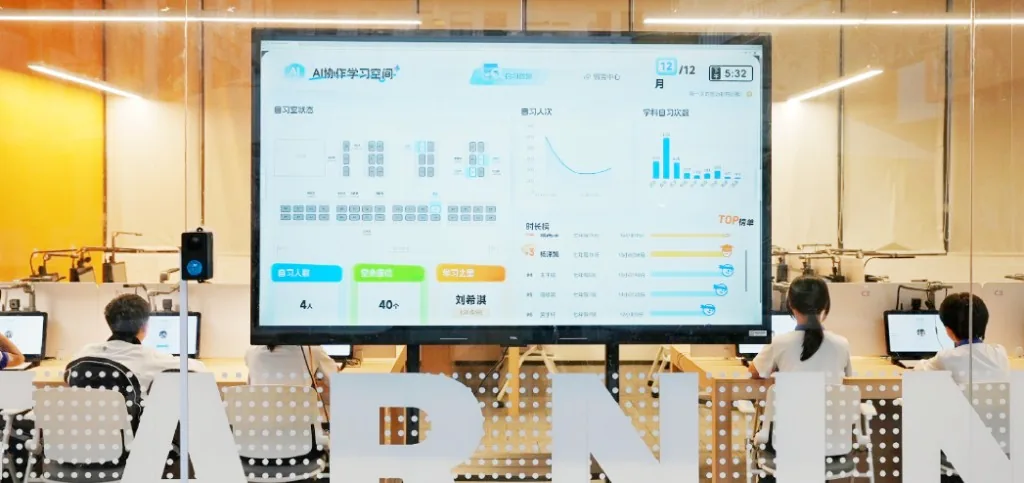
Different function scenes get different workflows and agent setups; they do not share one conversation policy. Textbooks, quizzes, video, and slides are the agent’s tools and evidence; student memory lets later conversations remember recent self-study actions and feel familiar.
Results and limits
The product has moved from demos and pilots into ongoing use in real schools: it now covers 10+ schools in Shenzhen; a ~30-day snapshot across five schools includes 3,300+ active students, 9,200+ learning sessions, and 3,000+ learning hours.
But “people are using it” is not the same as the product problem being solved. Schools still differ clearly in how students enter, how much teachers participate, how the space is run, and how often it is reused. That is how I came to see that the hard part of education AI is not only getting a model to answer correctly once, but making AI capability, teaching process, and the school’s real operating system form a long-term loop.
MY CONTRIBUTION
- Planned the student terminal, teacher console, school platform, booking kiosk, and display wall into a multi-surface architecture covering learning, teaching, and space operations
- Led the AI companion’s core capabilities, including agent workflows for different learning scenes, context engineering, tool use, memory, and behavior limits
- Used real learning data to find model and product failures, then turned correctness, process guidance, and evidence citation into testable acceptance criteria
- Worked with algorithm, engineering, hardware, and delivery teams through school pilots, and kept iterating from actual use
PROJECT OUTCOME
- The product is in daily use at 10+ schools in Shenzhen, producing real student learning sessions and learning hours
- A ~30-day snapshot across five schools covers 3,300+ active students, 9,200+ learning sessions, and 3,000+ learning hours
- At a key customer school, a 3-day English essay-review workflow was validated with an average AI–teacher score gap of about 0.3 points
Scope note: Usage figures mainly follow project stats through July 2026. Active students and learning sessions are a ~30-day snapshot across five schools.